|
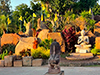
Wat Phu Man Fah (วัดภูม่านฟ้า)
Name of a Buddhist temple complex located in
Tambon Ban
Singh (บ้านสิงห์),
Amphur Nang Rong (นางรอง), in
Buriram Province and also known as
Wat Phraphuttabaht Sila. The temple’s modern development began around 1998 and is a work in progress under the guidance of
Luang Pho Daeng, but it was only officially established as a temple on 8 October 2019, and was certified as a Buddhist temple on 31 May 2021. The site originally started on a modest plot of land of 15 rai, donated by devotees, but later expanded and today occupies a site that extends over 200
rai. Within its grounds are multiple structures carved from sandstone, designed to evoke the aesthetic of ancient
prasat hin,
‘stone palaces’, i.e. sandstone sanctuaries in
Khmer style. The flagship project within the complex is Samnaksong Santitham (สำนักสงฆ์สันติธรรม), which resembles the layout of
Cambodia's
Angkor Wat (fig.). To the south of it is another large structure with the name Meuang
Siha Nakhon (เมืองสีหนคร), i.e. ‘Dwelling Place of Lions’. The architectural style of Wat Phu Man Fah reflects a revivalist approach, drawing inspiration from classical
Khmer and Thai stone temples such as
Prasat Phanom Rung (fig.) and
Prasat Hin Phimai (fig.), yet all constructions are of contemporary origin. The design emphasizes elaborate
bas-relief carvings and structural motifs that recall historic monuments, with the aim of creating a ‘stone-castle monastery’ that expresses both religious devotion and cultural heritage. The design of Samnaksong Santitham has been subject to international scrutiny, as
Cambodian officials have contended that the complex constitutes an imitation of
Angkor Wat (fig.), a UNESCO World Heritage site, while Thai authorities and the temple management assert that the design is rooted in Thai historical architectural traditions and constitutes an original creative synthesis rather than a direct copy. This debate highlights broader issues of cultural inspiration, architectural revivalism, and heritage ethics in a region where Thai and
Khmer historical influences intersect. Wat Phu Man Fah serves simultaneously as a site of Buddhist practice,
meditation, and pilgrimage, and as a cultural landmark, combining devotional function with contemporary architectural ambition and raising important questions about the relationship between modern religious construction and historical stylistic traditions. The complex is also referred to as Anachak Hin (อาณาจักรหิน) or the ‘Stone Kingdom’. Pronunciation and alternative transliteration is Wat Phoo Mahn Fah. WATCH VIDEO
and
VIDEO (EN).
回





|