|
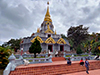
Phra Borommathat Chedi Sri Nagarindra Sathit Maha Santi Khiri (พระบรมธาตุเจดีย์ศรีนครินทร์สถิตมหาสันติคีรี)
Thai. Name of a hilltop Buddhist monument situated at the highest point of the
Doi Mae Salong range, approximately 1,500 metres above sea level and about 4 kilometres from
Santi Khiri village in Mae Fah Luang District,
Chiang Rai Province. Completed in 1994, construction of the
chedi had originally begun in 1989 as an act of royal merit-making dedicated to the Princess Mother,
Somdet Phra Boromma Raja Channanie
Sri Nagarindra (fig.), to mark the occasion of her 90th birthday. The monument forms part of
Wat Santi Khiri Yahn Sangwararam
(fig.).
Designed in an adapted
Lan Na
style inspired by
Chiang Saen's Wat Pa Sak (วัดป่าสัก),
the chedi rises 30 metres on a tiered square base approximately 15 metres wide
on each side. The exterior is clad in grey tiles and enriched with carved decorative motifs. Each side of the base contains three recessed niches, while the relic chamber is ornamented with standing
Buddha images facing the four cardinal directions. The bell-shaped section is embellished with gold plates, reinforcing both its visual prominence and symbolic radiance. Adjacent to the chedi stands a
wihaan built in a corresponding adapted Lan Na style. Owing to its elevated position at the summit of Doi Mae Salong, the site commands extensive panoramic views across the surrounding mountain landscape, particularly notable at sunset. The conspicuous silhouette of the
stupa, visible from considerable distances, has established it as a defining landmark and visual symbol of Doi Mae Salong, integrating religious devotion, regional architectural identity, and landscape prominence.
回





|